Phone/whatsapp:+86177-2151-9382
Physical address:
Yangshanfan Road Intersection, Chengdong Village, Hengcun Town, Tonglu County, Hangzhou City, Zhejiang. China
Email address:
Quote@weaveessence.com
Custom Woven Scarf Manufacturer — China Factory Direct
Custom Woven Scarf Manufacturer for OEM, Private Label & Bulk Orders
Custom woven scarves, jacquard scarves, shawls and pashminas produced factory-direct in China for OEM orders, private label programmes and bulk woven scarf production. Plain weave, twill, dobby and jacquard constructions. MOQ 500 pcs per style. OEKO-TEX certified. Sample in 10–15 working days.
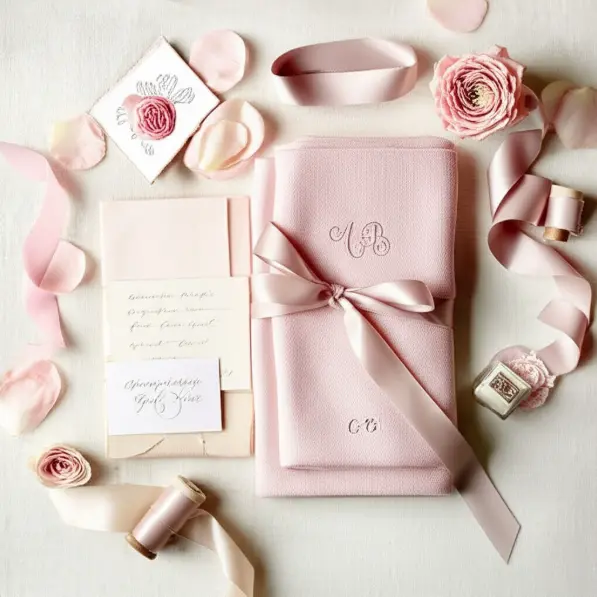
What We Produce as a Custom Woven Scarf Manufacturer
WeaveEssence is a China-based woven scarf manufacturer producing custom OEM scarves, shawls, and pashminas for fashion brands, wholesale importers, corporate gifting buyers, and private label retailers across 30+ countries. Our weaving facility operates shuttle and rapier looms covering four primary construction types: plain weave, twill, dobby, and jacquard — with finishing options including knotted fringe, hemmed edges, rolled borders, and printed selvedges.
Woven scarves differ fundamentally from knitted scarves in construction, drape, and end-use positioning. A woven fabric is produced by interlacing warp and weft yarns at right angles on a loom — the result is a structurally stable, non-stretch fabric that drapes fluidly and holds printed or woven patterns with high definition. This makes woven constructions the standard choice for fashion shawls, corporate gift scarves, pashmina-style wraps, and heritage-pattern programmes such as tartan or houndstooth.
Every woven scarf order follows the same development sequence regardless of volume: specification confirmation, loom setup, physical sample, buyer approval, bulk production with AQL 2.5 inspection, and shipment with full compliance documentation. Colour matching is verified to Delta E ≤ 1.5 using a spectrophotometer at both inline and pre-shipment stages. No bulk order proceeds without written sample sign-off from the buyer.
Factory direct means your purchase order goes directly to the loom floor — no trading company layer, no specification relay through an account manager who has never seen the inside of a weaving facility. Technical questions about warp count, weft density, fabric weight, or finishing method are answered by the production team, not by a sales intermediary.
Common Misconceptions About Woven Scarf Production
❌ Misconception
“Woven and knitted scarves are interchangeable — either works for most programmes.”
✔ Reality
Woven and knitted constructions serve fundamentally different end-use requirements and cannot be substituted without consequence. A knitted structure has inherent stretch; a woven structure is dimensionally stable. Jacquard woven patterns hold crisp edges because the weft yarn is locked at every intersection — knitted jacquard patterns have softer, slightly diffused edges due to loop structure. For heritage patterns, fine branding, or large shawl formats — woven is the only technically appropriate choice.
❌ Misconception
“Pashmina scarves from China cannot match Nepalese or Indian production quality.”
✔ Reality
The fibre grade, not the country of weaving, determines pashmina quality — and fibre certification is the only reliable verification. What determines quality is the micron count of the cashmere content (premium pashmina: 14–16 micron), the warp density, and the finishing process. Our woven cashmere and cashmere-blend scarves use Grade A fibres in the 16–19 micron range, verified by third-party test report from SGS or Intertek available on request.
❌ Misconception
“Digital printing on scarves is just as good as woven jacquard for branded programmes.”
✔ Reality
Print and jacquard weave produce different durability outcomes. Digitally printed scarves carry colour on the fabric surface — susceptible to colour fastness degradation with repeated washing (ISO 105-C06 Grade 3–4). Woven jacquard carries colour in the yarn structure, delivering Grade 4–5 wash fastness and a significantly longer product lifecycle. For corporate gifting and branded merchandise programmes, woven jacquard is the technically appropriate choice.
Weave Structures We Produce
We operate shuttle and rapier looms capable of producing all four primary weave structures used in commercial scarf manufacturing. Each structure has distinct visual characteristics, yarn requirements, and appropriate end-use contexts. Selecting the right weave at the specification stage prevents costly resample cycles later.
Structure 01
Plain Weave
Each weft yarn passes alternately over and under each warp yarn — producing a smooth, flat fabric with equal face and reverse appearance. Plain weave is the most cost-efficient woven construction and the standard choice for solid-colour fashion scarves, lightweight summer wraps, and corporate gifting programmes where a clean, uniform surface is required. Available in viscose, polyester, cotton, and wool-blend yarns.
Weight: 80–200 gsm
Sample: 10–15 days
Viscose / Polyester / Cotton
Structure 02
Twill Weave — Herringbone & Houndstooth
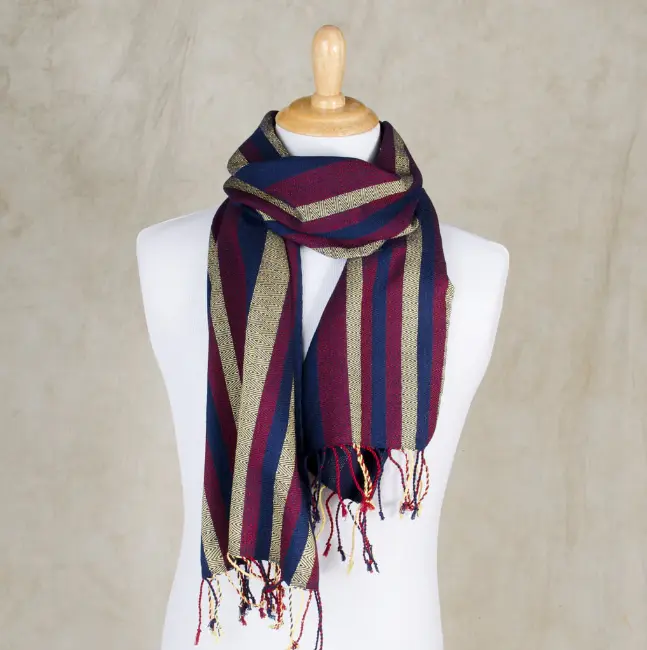
Twill creates a diagonal rib pattern by offsetting the weft interlacement point by one or more threads each row — producing a stronger, more durable fabric with better drape than plain weave at equivalent yarn weights. Herringbone and houndstooth are both twill-based patterns achieved by reversing the twill direction at specific intervals. These are among the most commercially requested woven scarf programmes, particularly for heritage fashion brands and winter collections.
Weight: 150–300 gsm
Sample: 10–15 days
Wool blend / Acrylic
Structure 03
Dobby Weave
Dobby looms produce small, geometric patterns woven directly into the fabric structure using a mechanical dobby head that controls individual warp yarn groups independently. Dobby patterns include small checks, geometric textures, and allover repeat motifs that provide surface interest without the setup cost of a full jacquard programme. The appropriate choice for buyers who want a woven texture pattern that reads as premium but at volume pricing closer to plain weave.
Sample: 10–15 days
Geometric / Check motifs
All fibres
Structure 04
Jacquard Weave
Jacquard looms control each individual warp thread independently via a programmed pattern card, enabling complex multi-colour designs, detailed figurative imagery, brand logos, and large-scale pattern repeats. Unlike dobby, jacquard has virtually no limit on pattern complexity. We support up to 6 colours per weft pick in jacquard woven programmes. Common applications include heritage tartan scarves, branded fan scarves, corporate identity programmes, and luxury fashion shawls.
Up to 6 colours/pick
Sample: 15–18 days
Test weave required
Finishing Options
Woven scarf finishing significantly affects the final appearance and perceived value of the product. All finishing methods are confirmed at the specification stage before sampling begins.
| Finish Type | Description | Best For |
|---|---|---|
| Knotted fringe | Warp ends grouped and hand-knotted | Fashion shawls, pashmina-style wraps |
| Twisted fringe | Warp ends twisted before knotting; denser appearance | Premium wraps, structured fringe aesthetic |
| Cut fringe | Warp ends cut and left unfinished; raw edge | Contemporary / casual programmes |
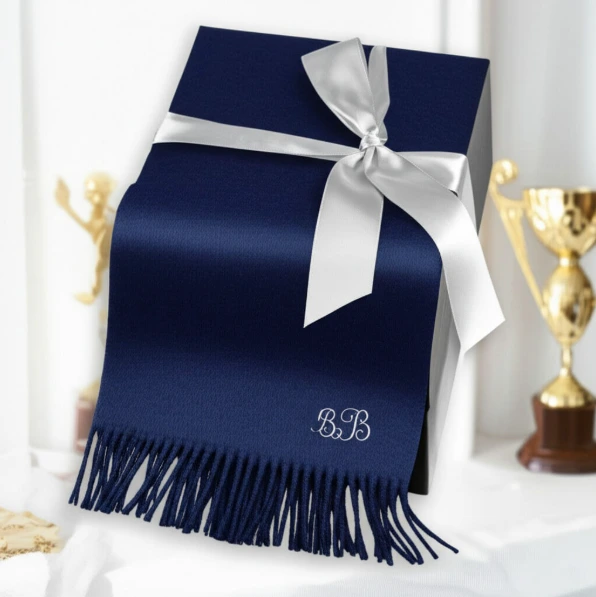
| Hemmed edge | Warp ends folded and stitched; clean, tailored | Corporate gifting, retail programmes |
| Rolled edge | Machine-rolled and stitched | Lightweight viscose / polyester fashion scarves |
| Printed selvedge / border | Additional printed border on woven base | Branded edge detailing |
Custom Woven Scarf Production Specification
The table below summarises the core production parameters for OEM woven scarf programmes at WeaveEssence. All specifications reflect factory standards as of 2026.
500 pcs
MOQ / style / colour
Delta E ≤ 1.5
Colour matching standard
AQL 2.5
QC inspection standard
30+ markets
Active export countries
| Parameter | Specification | Notes |
|---|---|---|
| MOQ | 500 pcs per style per colour | Multiple styles consolidated in one shipment; each counts independently |
| Weave structures | Plain, twill, dobby, jacquard | Herringbone and houndstooth are twill-based sub-structures |
| Jacquard colours per pick | Up to 6 colours per weft pick | Additional colours increase loom programming and setup time |
| Colour matching standard | Delta E ≤ 1.5 | Spectrophotometer verified at inline and pre-shipment stage |
| Sample lead time | 10–15 working days (plain/twill/dobby); 15–18 days (jacquard) | From confirmed specification and approved artwork |
| Bulk lead time | 35–45 working days | From PO + deposit; custom yarn dyeing may extend to 50 days |
| Fabric weight range | 80–350 gsm | Dependent on yarn type, count, and thread density |
| Fibre options | Viscose, polyester, acrylic, cotton, wool blend, cashmere blend, silk blend, recycled | Fibre content verified by third-party test report on request |
| Finishing options | Knotted fringe, twisted fringe, cut fringe, hemmed, rolled edge, printed border | Finishing confirmed at specification stage before sampling |
| Certifications | OEKO-TEX Standard 100 | GRS-certified recycled fibre available; BSCI audit completed |
| QC inspection | AQL 2.5 | Third-party inspection accepted; no cooperation fee charged |
| Export markets | US, UK, Germany, France, Australia, Canada, Japan, 30+ others | FOB Ningbo or Shanghai; EXW available |
Test references: ISO 105-C06 (colour fastness to washing), ISO 105-X12 (colour fastness to rubbing), ISO 6330 (dimensional change after washing).
Woven vs Knitted Scarves: Which Construction Fits Your Programme?
The choice between woven and knitted construction is a technical decision, not a preference. The table below identifies which construction is appropriate for specific programme requirements. If you are unsure which construction is appropriate, send us your reference product or design brief — our technical team will advise before you commit to sampling. Resampling due to a wrong construction choice typically adds 3–4 weeks to the development timeline.
| Programme Requirement | Woven Scarf | Knitted Scarf |
|---|---|---|
| Pattern definition (fine lines, logos) | High — warp/weft lock holds sharp edges | Medium — loop structure softens fine detail |
| Drape and fluidity | Excellent — especially in viscose and silk blends | Good — depends on gauge and yarn weight |
| Stretch and elasticity | None — dimensionally stable | Present — especially in rib constructions |
| Wash fastness | Grade 4–5 (ISO 105-C06) — colour in yarn structure | Grade 4–5 — comparable with yarn-dyed programmes |
| Weight range | 80–350 gsm | 150–600 gsm (includes chunky knit) |
| Best for | Fashion shawls, corporate gifting, heritage patterns, pashminas | Winter scarves, fan scarves, chunky texture programmes |
Why B2B Buyers Choose WeaveEssence as Their Custom Woven Scarf Manufacturer
Woven scarf programmes live or die on pattern accuracy and colour consistency — particularly for heritage tartan, branded jacquard, or houndstooth programmes where even a single misthreaded warp yarn is visible across the full width of the fabric.
Pattern Fidelity from Loom to Shipment
Our loom programming process includes a test weave review before any production quantity is cut. Pattern registration, colour sequence, and selvedge integrity are all confirmed on the test weave before bulk production is authorised. This test weave stage is not optional for jacquard programmes — it is the only reliable way to catch loom programming errors before they propagate across an entire order.
Fibre Transparency on Every Order
Woven scarf buyers in regulated markets — particularly EU and US importers — face strict fibre content labelling obligations under EU Textile Regulation No. 1007/2011 and the US FTC Textile Rules. We provide fibre content test reports from SGS or Intertek on request. We do not produce fibre content labels based on yarn supplier declarations alone.
Colour Accuracy Across the Warp Width
In woven production, colour consistency must hold not just batch-to-batch but across the full warp width of each loom run. Any dye lot variation within the warp will appear as a lateral stripe across the finished fabric. Our yarn preparation process uses matched dye lots across the full warp width for all solid-colour and twill programmes, verified at Delta E ≤ 1.5 at both yarn stage and finished goods.
Bulk and OEM Capacity for High-Volume Programmes
Our woven production lines are configured for sustained commercial volume. Fashion brand seasonal programmes of 5,000–20,000 pcs per style and wholesale importer reorder programmes of 50,000+ pcs per season are both within our standard production scheduling. Smaller development orders of 500 pcs receive the same loom setup rigour as large runs — because the specification and QC standards do not change with volume.
“We supply woven scarves and shawls to fashion brands, multi-location retail buyers, corporate gifting companies, and wholesale importers across 30+ countries. Every programme, regardless of volume, goes through the same test weave, AQL inspection, and colour verification process.”
Our 6-Step OEM Process for Custom Woven Scarves
All woven scarf programmes follow this structured workflow. For jacquard programmes, Steps 1 and 2 include an additional test weave review before sample approval is requested. See our custom scarf OEM service for full process documentation.
01
Specification Lock
Days 1–2
Weave structure, fibre content, dimensions, weight, colour references, and finishing method confirmed in writing before loom setup begins.
02
Test Weave (Jacquard)
Days 3–6
For jacquard programmes: loom programmed, test strip woven, pattern registration and colour sequence verified internally before sample is produced.
03
Physical Sample
Days 3–18
Sample produced in 10–18 working days (construction-dependent). Colour measured to Delta E ≤ 1.5 and documented. Shipped with full specification sheet.
04
Sample Approval
Days 18–26
Written approval or amendment comments from buyer. Revisions completed within 5–8 working days. No bulk order placed without signed-off sample.
05
Bulk Production & QC
Days 26–71
35–45 working days production. AQL 2.5 inspection across full production run. Colour verified at inline and pre-shipment stages.
06
Shipment & Documents
Days 71–78
Packed per buyer specification. QC report, fibre content documentation, and compliance declarations issued per shipment. FOB Ningbo or Shanghai.
Who Orders Custom Woven Scarves from WeaveEssence
Woven scarf programmes attract a distinct buyer profile compared to knitted scarf orders. The four types below represent our active woven scarf customer base.
Fashion & Private Label
Fashion Brands & Private Label
Seasonal collections in twill, dobby, or jacquard constructions. Typically 500–10,000 pcs per style in viscose, silk-blend, or wool-blend. Require OEKO-TEX documentation, fibre content labels, and retail-ready packaging. See our private label scarf manufacturing service for full programme details.
Corporate & Brand Merchandise
Corporate Gift & Brand Merchandise
Companies ordering jacquard-woven scarves with company logo, brand colours, or heritage pattern for client gifting, event programmes, or employee merchandise. Colour accuracy against brand Pantone references is the critical requirement. MOQ 500 pcs per design.
Wholesale & Distribution
Wholesale Importers & Distributors
Importers buying solid-colour plain weave and houndstooth/herringbone twill scarves for wholesale distribution. Typically 2,000–50,000 pcs per style. Reorder consistency across 2–4 seasons is the primary concern — same dye lot, same loom specification, same finishing. See our bulk scarf production page for volume programme details.
Private Label & Multi-Location
Multi-Location Retail Buyers
Buyers sourcing for retail private label lines or multi-location exclusive programmes. Require full traceability documentation, factory audit approval, and compliance with retail vendor standards (Sedex, BSCI, or equivalent). Third-party pre-shipment inspection standard on all orders.
Factory Credentials & Compliance Capability
View our full certification and compliance documentation, or review the factory production facility overview.
OEKO-TEX Standard 100
Our facility holds OEKO-TEX Standard 100 certification by Hohenstein, covering woven and knitted textile products produced on site. Testing covers 100+ regulated substances including azo dyes, formaldehyde, heavy metals, pH range, and pesticide residues.
The certificate is renewed annually and applies to all woven scarf, shawl, and pashmina programmes produced at our facility.
Fibre Content Verification
For any programme where declared fibre content is commercially or legally significant — cashmere blends, wool content claims, recycled fibre ratios — we provide third-party fibre content test reports from SGS or Intertek on request.
This is particularly important for EU buyers under Textile Regulation No. 1007/2011, which requires fibre content labels to reflect tested — not just declared — composition.
BSCI & Third-Party Audit
A BSCI (Business Social Compliance Initiative) audit has been completed at our facility. Audit results are available to buyers on request.
Third-party factory visits and pre-shipment inspections by SGS, Intertek, or Bureau Veritas are accepted at no additional cooperation fee. Full access to production floor, loom records, and QC documentation for any buyer-authorised inspector.
Questions Buyers Ask Most
What is the MOQ for custom woven scarves?
MOQ is 500 pcs per style per colour. Multiple styles can be consolidated in one shipment, but each style-colour combination counts independently toward MOQ.
What weave structures do you offer?
Plain weave, twill (including herringbone and houndstooth), dobby, and jacquard. Fringe, hemmed, rolled edge, and printed border finishing are all available.
How long does sampling take for woven scarves?
Plain weave, twill, and dobby: 10–15 working days. Jacquard programmes: 15–18 working days due to loom programming and test weave review.
Can you provide fibre content test reports for cashmere-blend scarves?
Yes — third-party fibre content test reports from SGS or Intertek are available on request for any programme with a fibre content claim.
What certifications come with woven scarf orders?
OEKO-TEX Standard 100 and BSCI audit results are available on request. REACH compliance declarations and EU Textile Regulation fibre labels are provided per shipment on request.
What is the bulk lead time after sample approval?
35–45 working days from PO confirmation and deposit. Programmes requiring custom yarn dyeing may extend to 50 days.
Can I send a third-party inspector for pre-shipment inspection?
Yes — SGS, Intertek, and Bureau Veritas are all accepted. No additional factory cooperation fee is charged for any buyer-authorised third-party inspector.
Related Pages
Buyer Decision Support
How Buyers Should Choose a Custom Woven Scarf Structure
A custom woven scarf is usually the better choice when the buyer needs flatter fabric, cleaner drape, sharper woven motifs, or a more refined fashion presentation than a thick knitted scarf can provide. The structure decision should be made before artwork finalisation because plain weave, twill, dobby, satin, and jacquard each handle logo detail, edge stability, hand feel, and bulk cost differently.
For OEM buyers, the key question is not only whether the fabric can be woven. The real question is whether the chosen structure can hold the design after finishing, keep size tolerance after pressing, support the label and packaging plan, and meet the buyer’s inspection standard at bulk scale.
Custom Woven Scarf Structure Decision Table
| Woven Structure | Best Buyer Fit | Texture / Drape | Risk to Confirm Before Sampling |
|---|---|---|---|
| Jacquard woven | Brand motifs, tonal logos, repeat patterns, fashion scarves, premium corporate gifts | Structured surface with woven-in pattern detail | Confirm artwork scale, float length, yarn colour limit, reverse-side appearance, and edge finish |
| Twill weave | Soft fashion scarves, silk-like polyester scarves, premium printed-look programmes | Smooth diagonal texture, good drape, refined hand feel | Confirm skew risk, colour fastness, fabric weight, and finishing shrinkage |
| Plain weave | Cost-controlled OEM scarves, lightweight scarves, simple patterns, promotional ranges | Stable, balanced, less textured than twill or jacquard | Confirm yarn density, transparency, edge sewing, and final GSM target |
| Dobby weave | Small geometric texture, understated branding, private label seasonal collections | Subtle raised texture without full jacquard complexity | Confirm motif repeat size, fabric density, and whether the design needs jacquard instead |
| Wool or pashmina-style weave | Winter fashion scarves, shawls, premium retail programmes, gift sets | Warmer, softer, heavier, with more volume than lightweight synthetics | Confirm fibre content label, brushing finish, pilling expectation, and carton compression method |
Woven Scarf Quote Controls
- Send finished size, fringe or hem requirement, fabric weight target, artwork file, colour standard, fibre direction, label files, packing method, and destination market before sampling.
- Ask the factory to confirm weave density, yarn count, edge treatment, colour tolerance, and inspection method before bulk yarn or fabric is committed.
- For private label woven scarf programmes, care label content, fibre declaration, hang tag, barcode sticker, folding method, polybag, and carton mark should be approved before full packing starts.
Related Technical Checks
Before approving a custom woven scarf sample, review woven scarf structures, weaving density control, tensile and tear strength, and colour fastness testing. If the design requires stretch, thicker texture, or knitted club scarf styling, compare it with our custom knitted scarf manufacturing page.
Start Your Custom Woven Scarf OEM Order
Send us your design brief, reference product, or Pantone references. We will confirm weave structure recommendation, fibre options, and sample timeline within 1 business day.
Request OEM Quote
MOQ 500 pcs per style per colour
Sample in 10–18 working days
OEKO-TEX Standard 100 certified
Delta E ≤ 1.5 colour accuracy
Factory direct — no trading company
AQL 2.5 QC on every shipment