Phone/whatsapp:+86177-2151-9382
Physical address:
Yangshanfan Road Intersection, Chengdong Village, Hengcun Town, Tonglu County, Hangzhou City, Zhejiang. China
Email address:
Quote@weaveessence.com
Cotton Scarf Manufacturer — China Factory Direct
Cotton Scarf Manufacturer for GOTS Organic & OEM Production
100% cotton, GOTS organic cotton and cotton-modal blend. Reactive dye solid, screen print, digital print and jacquard woven. ISO 105-C06 Grade 4+. OEKO-TEX Standard 100 certified. 25–35 day bulk lead time. WeaveEssence, Zhejiang China.

500 pcs
MOQ per Colour / Style
Grade 4+
ISO 105-C06 Reactive Dye
GOTS
Organic Cotton Available
25–35 Days
Bulk Production Lead Time
OEKO-TEX
Standard 100 Certified
Cotton — The Primary Fibre for Woven and Printed Scarf Manufacturing
Where acrylic dominates knitted scarf production, cotton is the default substrate for woven and printed scarves — the two construction types that account for most fashion, promotional and gift scarf programmes globally.
Cotton occupies a structurally distinct position in scarf manufacturing from synthetic fibres. Its capacity to accept reactive dye with exceptional colour depth — where the dye molecule forms a covalent bond with the cotton fibre rather than sitting on the surface — makes it the natural substrate for programmes where wash fastness is a primary specification. ISO 105-C06 Grade 4+ is the measurable outcome: the colour change rating after 45°C wash cycles that meets the standard for brand-channel approved colour durability, the same benchmark applied to premium cotton garment lines. WeaveEssence runs reactive dye, screen print, digital print and jacquard weaving within a single facility, giving buyers consolidated sourcing across all major cotton construction types without splitting production between suppliers.
The commercial case for cotton extends beyond technical performance. Natural fibre positioning is commercially active across multiple buyer segments — European fashion brand channels, sustainable gift collections, premium promotional programmes for ESG-committed corporate clients — and cotton carries a consumer credibility in these channels that synthetic alternatives cannot replicate at equivalent price points. This is amplified when the programme is built on GOTS-certified organic fibre, which enables a certified natural fibre claim throughout the supply chain from raw cotton field to finished article. For buyers building ranges around sustainability positioning, the combination of GOTS organic fibre and OEKO-TEX Standard 100 article certification — both available through WeaveEssence — provides the documented credential structure that retailers and procurement committees increasingly require as a condition of listing.
Cotton’s weight and drape profile also distinguishes it commercially. A 170×65cm cotton woven scarf in the 120–160g range drapes with a fluidity and falls with a weight that reads as premium relative to equivalent-dimension acrylic knitwear — a tactile quality that matters at buyer evaluation and in gifting contexts. This characteristic drape, combined with cotton’s responsiveness to complex colour through reactive dyeing and to structural pattern through jacquard weaving, is why fashion brands consistently return to cotton for seasonal printed and woven collections rather than substituting synthetics that would reduce input cost but compromise the aesthetic that positions the product at its intended target channel price.
Industry Misconception
“Cotton scarves fade after a few washes — the colour doesn’t last.”
This reflects what happens when cotton is coloured using pigment printing without proper fixation chemistry, or dyed with direct dyes at insufficient concentration — processes associated with low-cost commodity production, not factory-controlled reactive dyeing. Reactive dye forms a covalent bond with the cotton fibre at a molecular level: the dye is not a surface deposit but a structural part of the fabric.
The result is ISO 105-C06 Grade 4+ wash fastness — a measurable, third-party-verified specification, not a marketing assertion. Cotton colour fades in the market when the wrong process is specified; correctly reactive-dyed cotton retains colour depth across the wash cycles that consumers actually apply.
Factory Technical Parameters
Cotton Scarf Specifications — WeaveEssence Production
- Fabric tiers: 100% cotton / GOTS organic / cotton-modal 55/45 or 50/50
- Reactive dye wash fastness: ISO 105-C06 Grade 4+
- Screen print: 1–6 colours, fixed registration, Pantone TCX matching
- Digital print: full-bleed photographic quality, no screen setup cost
- Jacquard woven: tone-on-tone, 2–4 colour, logo in-fabric (no surface ink)
- Standard dimensions: 170×65 cm or 180×70 cm; custom available
- Weight range: 90–200g per piece
- Finish options: knotted / twisted / hemmed fringe
- GOTS organic cotton: farm-to-article chain-of-custody
- OEKO-TEX Standard 100 certified; AQL 2.5 inspection
Three Cotton Fabric Tiers — Standard, Organic and Cotton-Modal Blend
Fabric tier selection determines the certification pathway, price positioning and drape character of the finished scarf. The choice is made at brief stage.
Tier 01 — Standard
100% Cotton — Woven, Printed & Reactive Dye Programmes
The default specification for screen-print, digital-print and reactive dye solid programmes. A flat woven cotton surface provides clean ink holdout for logo detail and colour accuracy across all three decoration processes, and accepts reactive dye with a uniformity that delivers consistent colour from the first piece to the last in a 500 pcs run. The weight range of 90–160g covers everything from lightweight printed fashion scarves to heavier woven gift constructions. OEKO-TEX Standard 100 article certification is available on all standard cotton programmes — it certifies the finished article against 100+ regulated substance parameters, including formaldehyde, heavy metals and allergenic dyes, which is increasingly expected at brand compliance listing stage in EU markets.
90–160g weight range
ISO 105-C06 Grade 4+
Pantone TCX matching
OEKO-TEX Std 100
Screen / Digital / Reactive dye
Tier 02 — Sustainability
GOTS Organic Cotton — Full Chain-of-Custody Certification
GOTS-certified organic cotton covers the entire supply chain from raw fibre through spinning, dyeing and finishing to the finished article — verifying that the cotton was grown without synthetic pesticides or fertilisers, processed using environmentally responsible wet-processing chemistry, and handled under social compliance conditions at each facility. This chain-of-custody documentation is the requirement for buyers who need to make certified organic claims on product labelling or in brand sustainability submissions. OEKO-TEX Standard 100 article certification can be layered on top as an additional substance-safety credential. Both certifications must be specified at brief stage: the documentation trail is established from yarn procurement and cannot be added retrospectively to a standard cotton programme already in production.
GOTS certified fibre
Farm-to-article chain of custody
No synthetic pesticides / fertilisers
OEKO-TEX add-on available
Specify at brief stage
Tier 03 — Fashion Premium
Cotton-Modal Blend — 55/45 or 50/50, Softer Drape
Modal fibre — produced from beech wood cellulose — blended with cotton at 55/45 or 50/50 ratio adds surface softness and fluid drape that reads as a step above standard cotton without the cost of full modal or silk. The blended fabric accepts reactive dye with slightly enhanced colour saturation versus 100% cotton, producing a richer, more luminous colour field that suits the mid-market fashion price point this tier is designed for. At 120–180g per piece, the cotton-modal scarf has the physical weight and drape that positions it credibly at department channel and fashion brand price points. Input cost is marginally higher than 100% cotton, which is reflected in the unit price — buyers targeting accessible fashion brand channels or department channel own-brand programmes where hand-feel is part of the in-channel quality cue will find the premium justified.
55/45 or 50/50 blend
120–180g weight range
Enhanced colour saturation
Fluid drape — fashion OEM
Reactive dye Grade 4+
Three Construction Formats — Print, Dye and Woven
Each construction addresses a distinct design requirement and commercial use case. Construction selection is confirmed at the same stage as fabric tier — they are linked decisions.
Construction 01
Screen & Digital Print — Multi-Colour Logo and Full-Bleed Artwork
Screen printing applies pigment or reactive ink through a mesh stencil to a defined location on the cotton surface — the standard process for positioned logo placement in one to six colours at production volume. Colour accuracy to Pantone TCX reference is achievable, and registration consistency across a 500 pcs run is maintained through mechanical screen alignment. Digital printing uses inkjet technology to deposit ink across the full fabric surface in photographic resolution without any screen preparation step, making it the correct choice for complex multi-colour designs, colour gradients, rotating seasonal artworks and programmes where screen amortisation across the order quantity is not commercially justified. Both processes are available within the same facility; the choice between them is determined by design complexity, colour count and the frequency with which artwork changes between runs.
Construction 02
Reactive Dye Solid — Grade 4+ Wash Fastness, Full Palette
Reactive dyeing is the only process WeaveEssence specifies for solid-colour cotton scarf programmes where wash fastness is a primary requirement. The reactive dye molecule bonds covalently to the cotton fibre during the dye bath process — not deposited on the surface, but chemically integrated into the fibre structure. The practical outcome is ISO 105-C06 Grade 4+ wash fastness across the full colour palette: deep darks, pastels, saturated mid-tones and neutrals all achieve the same performance grade. Pantone TCX colour matching is available; dye bath chemistry is calibrated to the approved colour standard before production begins, and consistency across the batch is maintained through controlled temperature, bath ratio and dwell time. AQL 2.5 colour inspection is conducted on the finished goods before shipment approval.
Construction 03
Jacquard Woven — Pattern In-Fabric, No Surface Ink
Jacquard woven cotton scarves are produced on Jacquard head looms where each warp thread is individually controlled by a digital programme derived from the buyer’s artwork. The pattern — a brand logo, geometric design, border-and-field composition or text — is built directly into the weave structure using yarn-dyed cotton threads, not applied to the fabric surface. There is no ink to crack, peel or wash out; the pattern integrity is permanent by construction. Available constructions include tone-on-tone single-colour weaves, two-colour interlaced designs and multi-colour patterns up to four colours with increasing loom complexity. Standard formats are 170×65 cm and 180×70 cm; fringe finishing options include knotted, twisted and hemmed. Jacquard is the premium construction choice for corporate gift scarves, branded brand channel collections and any programme where long-term pattern durability is a product claim.
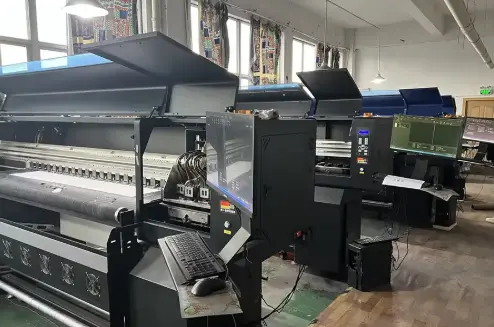
Reactive dye solid — ISO 105-C06 Grade 4+, Pantone TCX matched
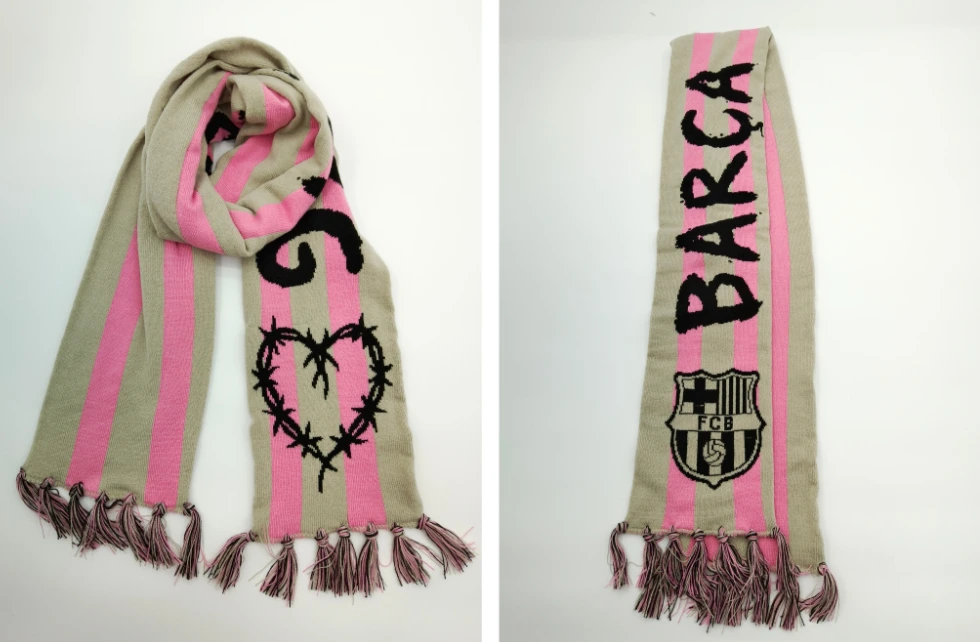
Jacquard woven — in-fabric logo, permanent pattern, no surface ink
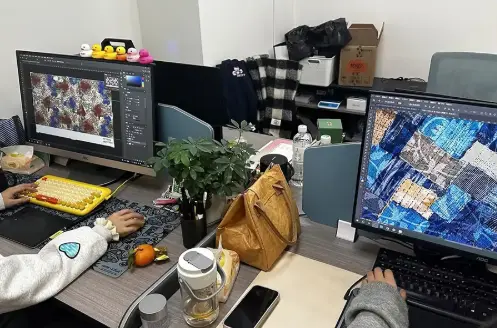
GOTS organic cotton — chain-of-custody farm to finished article
Commercial Parameters — MOQ, Lead Time and Certification
Fixed commercial terms across all fabric tiers and construction formats. Organic cotton MOQ and lead time confirmed at enquiry stage based on fibre availability and certification scope.
500 pcs
MOQ per Colour per Style
10–15 Days
Sample Lead Time
25–35 Days
Bulk Production Lead Time
90–200g
Weight Range per Piece
Technical Specification Reference
Core parameters across all fabric tiers and construction formats. Full data sheets and test reports provided at sampling stage.
| Parameter | Specification |
|---|---|
| MOQ | 500 pcs per colour per style (all tiers and constructions) |
| Sample Lead Time | 10–15 working days from spec approval |
| Bulk Lead Time | 25–35 days from sample approval and deposit receipt |
| Standard Dimensions | 170×65 cm or 180×70 cm; custom dimensions available |
| Weight Range | 90–200g per piece (fabric tier and construction dependent) |
| Fabric Tiers | 100% cotton / GOTS organic cotton / Cotton-modal blend 55/45 or 50/50 |
| Construction Formats | Reactive dye solid / Screen print (1–6 colours) / Digital print (full-bleed) / Jacquard woven (2–4 colours) |
| Colour Fastness | ISO 105-C06 Grade 4+ (reactive dye); Grade 3–4 (screen print, process dependent) |
| Jacquard Pattern Options | Tone-on-tone / 2-colour interlaced / Multi-colour up to 4 colours / Border-and-field |
| Fringe Finishing | Knotted / Twisted / Hemmed (construction dependent) |
| Certifications | OEKO-TEX Standard 100 certified factory; GOTS organic cotton available |
| Inspection Standard | AQL 2.5 — colour, dimensions, finish quality |
OEM Manufacturing Process — Brief to Shipment
GOTS and OEKO-TEX certification pathways must be confirmed at step 1 — the documentation chain cannot be established retrospectively after yarn procurement begins.
01
Days 1–3 from Enquiry
Technical Brief & Certification Scope
Buyer specifies fabric tier (standard, organic, cotton-modal), construction format (reactive dye, screen print, digital print, jacquard woven), weight target, dimensions and finish. Critically: GOTS and OEKO-TEX scope confirmed here — organic cotton yarn procurement must align with GOTS certification before any fabric is ordered. WeaveEssence advises on which certifications are achievable for the specified construction and confirms organic cotton MOQ and availability if applicable.
02
Days 4–8
Colour Development & Artwork Preparation
For reactive dye solid: dye lab develops colour to Pantone TCX reference; lab dip sample on the specified fabric submitted for buyer approval before bulk dye bath is prepared. For screen print: artwork separated into colour channels; screen exposure prepared. For digital print: artwork file reviewed for resolution and colour profile; digital proof issued. For jacquard: artwork converted to weave programme; loom simulation preview issued for buyer review of pattern resolution.
03
Days 9–15 (Sample)
Sample Production & Approval
Physical sample produced using approved colour or artwork on the specified fabric and construction. Reactive dye: ISO 105-C06 wash fastness test conducted on sample piece and results reported. Screen/digital print: print registration, colour accuracy and ink adhesion assessed. Jacquard: weave structure, pattern clarity and fringe finish reviewed. Sample ships with technical data sheet for buyer approval. No bulk production scheduled until sample is formally approved.
04
Days 16–20 (Post-Approval)
Bulk Production Planning & Certification Documentation
Bulk order placed against approved sample. Fabric and yarn lot confirmed — for GOTS programmes, GOTS-certified yarn lot documentation verified before production commitment. OEKO-TEX test schedule confirmed for bulk run. Production plan issued with machine scheduling and target completion date. Packaging specification finalised: polybag, hang tag, folded or rolled format, custom outer carton options. Deposit invoice issued per commercial terms.
05
Days 21–35 (Bulk)
Bulk Production, Finishing & QC
Reactive dye: dye bath prepared to approved colour standard at controlled temperature, bath ratio and dwell time; colour consistency maintained across the full fabric lot. Screen print: production run with registered screens; squeegee calibration checked per run. Jacquard: warp set up from approved programme; pattern clarity and thread count inspected at intervals during weaving. Fringe finishing applied per specification. AQL 2.5 final inspection on finished goods: colour, dimensions, fringe finish, print registration.
06
Day 35–38
Documentation & Shipment
Documentation package compiled: QC report (AQL 2.5 results, colour reference, dimensional results), ISO 105-C06 test certificate (reactive dye), OEKO-TEX Standard 100 certificate (where selected), GOTS transaction certificate (where selected — covers fibre and processing chain), fibre composition declaration and care labelling documentation. Shipped EXW Zhejiang; FOB Ningbo available. Commercial invoice and packing documents per buyer’s import requirements.
Who Sources Cotton Scarves from WeaveEssence
Four buyer profiles — each with a different primary specification, but sharing cotton as the correct fibre for their commercial brief.
Buyer Profile 01
Fashion Brand Buyers — Seasonal Printed & Woven Collections
Fashion brand buyers building seasonal printed scarf collections need a substrate that accepts complex artwork cleanly, drapes credibly at the target channel price point and carries natural-fibre labelling that reads as premium to the end consumer. Standard 100% cotton for screen or digital print at 90–160g, or cotton-modal blend for elevated softness at 120–180g, are the two specifications most frequently selected for fashion brand OEM. Jacquard woven cotton is the choice for range-defining pieces where structural pattern replaces surface print as the design statement. WeaveEssence’s 25–35 day bulk lead time fits within the standard pre-season development windows of European and North American fashion brand calendars.
Buyer Profile 02
Sustainable Gifting Brands — GOTS Organic Cotton Collections
Brands building gift collections around sustainability positioning — zero-waste gifting, B Corp-aligned corporate gifts, ethical fashion brand channels — need certified organic fibre with documented chain-of-custody, not simply “natural fibre” labelling. GOTS-certified organic cotton from WeaveEssence provides the full traceability from farm through processing to finished article that retailers and corporate sustainability committees require as a condition of approved supplier listing. For buyers whose customers actively check certification documentation, the GOTS transaction certificate per order is the auditable proof that supports organic product claims under the EU Green Claims Directive and similar regulations.
Buyer Profile 03
Corporate Gifting & Promotional Buyers — Branded Woven Scarves
Corporate procurement buyers sourcing branded scarves for staff gifts, client relationship programmes or event merchandise need a product that maintains its quality and brand presentation over extended use — conditions that favour jacquard woven construction over printed alternatives for programmes with long distribution timelines. The in-fabric logo in a jacquard woven cotton scarf cannot fade, peel or wash out regardless of how the recipient launders it, which removes the most common quality failure mode in promotional textile programmes. Standard or OEKO-TEX-certified cotton is available; GOTS organic cotton is available for ESG-aligned corporate clients whose procurement policy requires certified sustainable materials in branded merchandise.
Buyer Profile 04
Private Label Importers — Consolidated Cotton and Multi-Material Sourcing
Private label importers supplying multiple brand clients across European markets benefit from sourcing cotton, acrylic, merino and cashmere scarves from a single facility with consistent QC standards and shared documentation formats. WeaveEssence manufactures all four fibre categories under the same AQL 2.5 inspection framework, with OEKO-TEX certification available across all materials. For importers whose brand clients have varying sustainability requirements — some standard, some GOTS, some OEKO-TEX only — the ability to manage all specification tiers within a single supplier relationship eliminates vendor management overhead and simplifies brand audit preparation.
Why Buyers Return to WeaveEssence for Cotton Scarf Production
Reactive dye precision, certification documentation and construction range — the three operational reasons for repeat orders across all four cotton construction formats.
Reactive Dye Calibrated to Approved Colour Standard — Not Approximate Match
WeaveEssence’s reactive dye process begins with a lab dip on the specified fabric submitted for buyer approval before any bulk dye bath is prepared. The dye bath chemistry — temperature, bath ratio and dwell time — is then calibrated to the approved colour standard, not to a general shade target. AQL 2.5 colour inspection on the finished goods confirms the bulk production matches the approved lab dip before shipment is released. For buyers with branded colour standards or licensed colour specifications, this process is the difference between a usable bulk delivery and a reprinting programme.
GOTS Documentation Prepared Before Yarn Procurement Begins
WeaveEssence initiates the GOTS transaction certificate documentation at yarn procurement, not at goods dispatch — the sequence that GOTS certification requires and that brand compliance auditors check first. Buyers who specify organic cotton as a post-production afterthought typically discover that the GOTS chain-of-custody cannot be applied retrospectively: the yarn lot must be GOTS-certified from the point of procurement. Confirming GOTS scope at brief stage eliminates this documentation gap and ensures the transaction certificate covers the complete production chain from fibre to finished article.
Four Construction Formats Under One Roof
Reactive dye, screen print, digital print and jacquard weaving are all available within a single WeaveEssence facility. For importers managing a range that includes solid-colour gift scarves, printed fashion scarves and woven branded scarves, consolidating all four formats with one supplier eliminates the supplier coordination overhead, quality standard variation and documentation format differences that arise when construction types are split across multiple factories. A single purchase order, a single QC report format, a single OEKO-TEX certificate scope — across all four construction types simultaneously.
Frequently Asked Questions — Cotton Scarves
What is the MOQ for cotton scarves at WeaveEssence?
500 pcs per colour per style — the minimum batch required for reactive dye bath chemistry to calibrate colour consistently across the run. The same minimum applies to screen-print programmes to amortise screen setup and squeegee calibration at a viable per-unit cost.
Reactive dye, screen print, digital print — which should I specify?
Reactive dye for solid-colour programmes requiring ISO 105-C06 Grade 4+ wash fastness — dye bonds to the fibre, not the surface. Screen print for positioned logo in 1–6 colours at volume. Digital print for full-bleed photographic artwork or rotating designs where screen setup cost is not justified by the run quantity.
What organic cotton certifications are available?
GOTS-certified organic cotton provides full chain-of-custody from farm to finished article; OEKO-TEX Standard 100 is available as an additional substance-safety layer on both standard and organic programmes. Both must be specified at brief stage — the documentation chain cannot be added retrospectively after yarn procurement.
What logo methods are available for cotton scarves?
Screen print for positioned logo in 1–6 colours at volume; digital print for full-colour photographic artwork without screen setup cost; jacquard woven logo built in-fabric — permanent, cannot fade or wash out. Woven or embroidered labels available for brand identification where the scarf design is separate from the brand mark.
When does cotton make more sense than polyester for a scarf programme?
Choose cotton when natural fibre positioning is commercially relevant to the end buyer — fashion brand channels, sustainable gifting, ESG-aligned corporate procurement, or any programme requiring GOTS certification for certified organic claims. Choose polyester when full-colour sublimation print quality, lower per-unit cost at equivalent weight, or moisture management performance is the primary specification — polyester printed styles also carry 30–40% shorter lead times than cotton equivalents, which matters in time-sensitive promotional programmes.
Related Products & Pages
Source Cotton Scarves from WeaveEssence — 500 pcs MOQ
100% cotton, GOTS organic and cotton-modal blend. Reactive dye ISO 105-C06 Grade 4+, screen print, digital print and jacquard woven — four construction formats from one facility. OEKO-TEX Standard 100 certified. Sample lead time 10–15 days from spec approval.
- 500 pcs MOQ — 25–35 day bulk lead time
- Reactive dye solid — ISO 105-C06 Grade 4+
- Screen print 1–6 colours; digital print full-bleed
- Jacquard woven — permanent in-fabric pattern, 2–4 colours
- GOTS organic cotton — full chain-of-custody documentation
- Cotton-modal blend 55/45 or 50/50 — fashion premium
- OEKO-TEX Standard 100 certified factory
- AQL 2.5 inspection — QC report with every shipment