Phone/whatsapp:+86177-2151-9382
Physical address:
Yangshanfan Road Intersection, Chengdong Village, Hengcun Town, Tonglu County, Hangzhou City, Zhejiang. China
Email address:
Quote@weaveessence.com
Home › Products › Woven Scarves
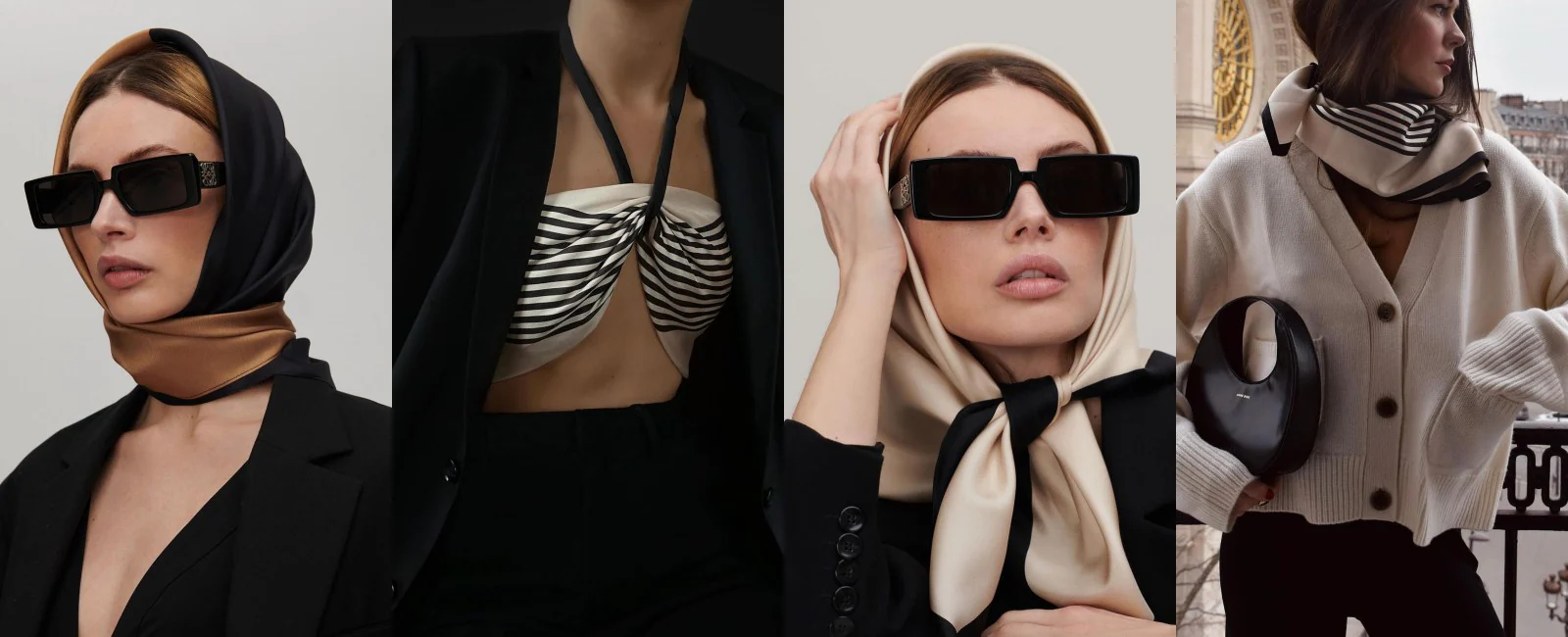
Choose Your Custom Scarf Fabric
In our commitment to safeguarding the Earth and its inhabitants, we primarily offer natural materials such as silk, wool, cashmere, and blended biodegradable fabrics. Additionally, we provide recycled options like polyester crafted from plastic bottles and recycled cotton from old garments, alongside organic choices like organic cotton.
Polyester Fabrics
| Picture | Fabric | Thickness | Fabric Width | Introduction |
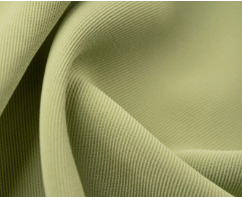 | 100% Polyester twill jacquard Fabrics | 50D/75D (the higher the thicker) | 170 CM | Polyester twill mimics silk twill’s luxe look with its smooth and soft texture, notable for a distinctive diagonal pattern. This fabric combines silk-like elegance with the practicality of being durable, easy to wash, and wrinkle-resistant, all at a fraction of silk’s cost. Ideal for promotional items and gifts, polyester twill is cost-effective yet less breathable, with less vibrant color on the reverse side. |
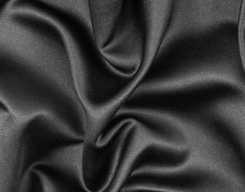 | Polyester Satin (100% polyester) | 50D/75D | 170 CM | Polyester satin, a versatile fabric, comes in various types including glossy satin, matt satin, and stretch satin. Glossy satin and matt satin closely mimic the luxurious appearance of silk satin, boasting a radiant surface and rich lustre. Unlike silk satin, polyester satin offers practical benefits such as machine washability and resistance to wrinkles. Its affordability and comfort make it an ideal choice for scarves, often used in promotional gifts by brands or as part of uniforms for banks, airlines, schools, clubs, and more. |
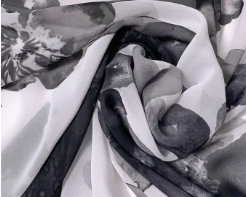 | Polyester Chiffon (100% polyester) | 30D/50D/75D | 150/200 cm | Polyester chiffon, a fabric akin to the elegance of silk chiffon, boasts a delicate weave that creates a sheer, gauzy texture. Its softness, combined with a light and smooth touch, offers elasticity and a pristine look. The fabric’s micro-porous structure sets it apart from other polyester variants, enhancing its airiness. Double-sided printed chiffon exudes vibrancy, making it an excellent selection for versatile beachwear and accessories such as dye-ready scarves, flowing shawls, modest hijabs, or bridal wraps. |
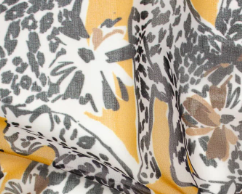 | Polyester Voile (100% polyester) | 30D/50D/75D | 150/200 cm | Polyester Voile, characterized by its sheer, lightweight quality, comes in various weaves including plain, twill, and satin. Its softness is akin to that of cotton yarn, making it a preferred choice among apparel brands for crafting scarves. The material’s affordability is matched by its elegance and lightness, offering excellent drape, moisture-wicking properties, and breathability. The dual-sided color vibrancy of polyester voile lends itself well to diverse designs such as dyed, printed, or yarn-dyed scarves, making it versatile for all seasons. |
100% Silk Fabric
| Picture | Fabric | Weight (1 momme = 4.34 gsm) | Fabric Width | Introduction |
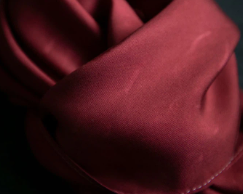 | Silk Twill (100% silk) | 10-19 momme | 94/114/140 cm | Silk twill, chosen by luxury brands like Hermès for its scarves, is valued for its versatility ranging from soft and fluid to crisp textures. It features a distinct diagonal weave, excellent drape, and resilience. When printed, it produces vivid images and its twill texture allows colors to shimmer elegantly, lending a sophisticated sheen to accessories. |
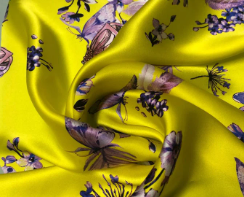 | Silk Satin (100% silk) | 12-40 momme | 94/114/140 cm | Silk (crepe) satin boasts a lustrous sheen and a supple drape, characterized by its tightly woven structure that combines a glossy satin face with a matte twill reverse. This fabric is celebrated for its exceptional smoothness, elasticity, and resilience, making it a preferred choice for high-end fashion applications. Notably, silk satin’s vibrant sheen is particularly enhanced through printing techniques, adding to its luxurious appeal. However, it’s important to note that silk satin is prone to significant shrinkage and may lose some of its luster after laundering. |
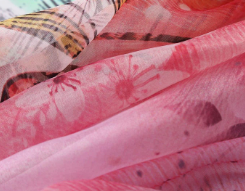 | Silk Chiffon (100% silk) | 6-12 momme | 114/140 cm | Silk chiffon, esteemed for its refined transparency and effortless flow, stands out as a fabric of grace. Its gossamer weave offers a light, sophisticated touch that is both airy and smooth to the touch. Celebrated for its breathability and ease of care, chiffon’s inherent elegance makes it an ideal choice for high-end fashion. From luxurious evening wear to delicate bridal attire and versatile accessories like scarves and lingerie, silk chiffon caters to comfort across seasons—cooling in summer’s heat and cozy in winter’s chill. |
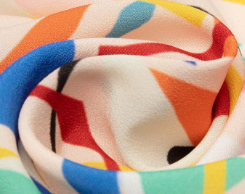 | Silk Crepe De Chine (100% silk) | 12-40 momme | 114/140 cm | Silk crepe de chine boasts a distinctive crepe texture achieved through weaving weft threads in an alternating pattern of two left-twisted and two right-twisted strands. This intricate process results in the fabric’s characteristic slightly irregular and wavy surface, adorned with subtle, scaly wrinkles post-refinement. Renowned for its anti-wrinkle properties, silk crepe de chine ensures a cool and comfortable wearing experience. It is the material of choice for crafting elegant evening wear, bridal attire, breezy summer tops, flowing skirts, delicate shawls, and sophisticated scarves. |
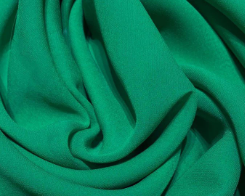 | Silk Georgette (100% silk) | 8-12 momme | 114/140 cm | Silk georgette boasts a distinctive crinkled texture and a sophisticated sheer quality, presenting a graceful, subdued sheen. This luxurious fabric is adorned uniformly with minuscule, refined crimps and characteristic pebbly indentations. With its delicate weight and exquisite transparency, ensuring comfort with its stretchability and excellent breathability. Typically, it experiences a shrinkage range of about 10-12%, making it an excellent choice for crafting elegant blouses, flowy dresses, sumptuous evening attire, and chic scarves and head accessories. |
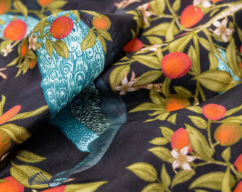 | Silk Habotai (100% silk) | 8-12 momme | 114/140 cm | Habotai silk, a fabric celebrated for its subtlety, offers an even surface free of the characteristic crinkles found in crepe. Boasting a uniform finish, this fabric shimmers with an understated glow akin to, yet softer than, the sheen of satin, striking a balance between radiant and reserved. Habitually experiencing minimal shrinkage, around 5%, this silk variant is tightly woven and exudes elegance with its fine and smooth structure, tender touch, and luxurious luster. Its seamless comfort makes it an ideal choice for crafting inner comfortable shirts and delicate scarves. |
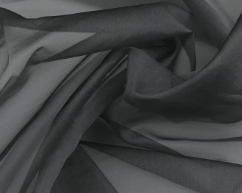 | Silk Organza (100% silk) | 5-14 momme | 114/140 cm | Organza, crafted from silk, is known for its airy weave that offers a gentle, elastic touch and a smooth texture. Its sheer design is punctuated by uniformly spaced, petite perforations, with the density of these apertures indicating its superior quality. The breezy nature of the fabric is enhanced by its ability to facilitate airflow, ensuring unparalleled breathability. Pre-treatment with acid gives silk organza a distinctive crispness, setting it apart from the classic softness and fluidity typical of other silk varieties. |
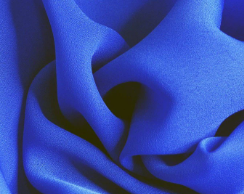 | Silk Double Georgette (100% silk) | 16/19 momme | 114/140 cm | Silk double georgette presents a unique blend of elegance and versatility. This textile strikes a balance between the sheen of silk satin and the understated quality of silk crepe de chine. Its surface showcases a subtle texture with fine, gentle undulations, reflecting a sophisticated luster that is more pronounced than that of silk crepe de chine. Both sides of the fabric boast an even sheen and hue, complemented by a matte finish and a hint of stretch for comfort, Its loose weave contributes to its softness, fluid drape, and slight elasticity. |
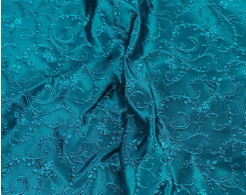 | Silk Jacquard (100% silk) | 14-22 momme | 114/140 cm | Jacquard silk exhibits intricate, textured designs arising from a unique weaving technique where warp threads are artfully elevated and lowered, crafting distinct motifs upon the fabric’s surface. This textile takes on a multi-dimensional appearance through subsequent dyeing or printing processes, as the jacquard regions reflect light differently, offering a striking visual depth. Noteworthy for its lightweight, suppleness, and breathability, jacquard silk is an exceptional choice for crafting elegant scarves, neckties. Offering the option for bespoke patterns, jacquard fabric requires a minimum order of 30 meters per design. |
100% Silk Fabric
| Picture | Fabric | Weight (1 momme = 4.34 gsm) | Fabric Width | Introduction |
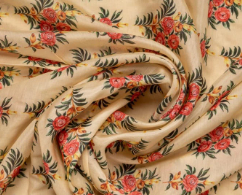 | Silk Cotton (30% silk & 70% cotton, 40% silk & 60% cotton or 50% silk & 50% cotton) | 9-19 momme | 114/140 cm | Crafted from a blend of natural fibers, silk cotton merges the best qualities of mulberry silk with the comfort of combed cotton. This fabric is soft, breathable, and has a gentle sheen, offering the luxurious touch of silk without the high price. Available in various weights and finishes like yarn, twill, and satin, it’s an excellent choice for scarves, cushions, and sleepwear, providing both elegance and practicality. |
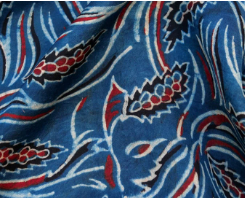 | Silk Modal (15% silk & 85% modal, 30% silk & 70% cotton, or 50% silk & 50% cotton) | 9-19 momme | 114/140 cm | Modal fabric, a pure and natural fiber derived from plants, poses no risk to human health and is eco-friendly. Its inherent softness and superior moisture-wicking properties make it ideal for blending with mulberry silk. The resulting silk modal blend inherits silk’s softness, lightness, breathability, and sheen, along with the modal’s strength and resistance to creases. Available in plain and twill weaves, silk modal resembles cotton in its environmental benefits, offering a sustainable alternative. |
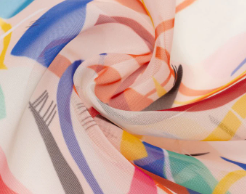 | Silk Wool (40% silk & 60% wool, 48% silk & 52% wool ) | 15-21 momme | 114/140 cm | A blend of silk and wool, silk-wool fabric integrates the qualities of both materials, leaning more towards the feel of wool, yet is distinctively lighter. This amalgamation mitigates the coarse texture associated with wool, endowing the fabric with a refined luster and sleekness. It harmoniously marries the insulating benefits of wool with the comfort and gentleness of silk against the skin. The fusion results in a fabric that’s soft to the touch and resistant to wrinkling. Silk wool is commonly woven into three patterns: plain, twill, and satin. |
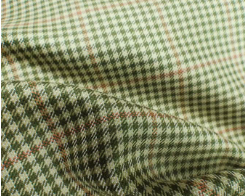 | Silk Cashmere (30% silk & 70% cashmere, 50% silk & 50% cashmere) | 12-16 momme | 114/140 cm | Silk cashmere, an exquisite fusion of silk’s sleekness and cashmere’s luxury, offers unmatched softness, lightness, and breathability. This fabric blend stands out with its exceptional wrinkle resistance, graceful drape, and refined elegance. Its warm, rich colors boast the lustrous sheen of mulberry silk combined with the subtle glow of cashmere, making it a visually and tactilely superior choice. |
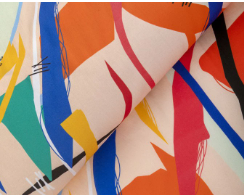 | Silk Bamboo (25% silk & 75% bamboo, 30% silk & 70% bamboo) | 17/19 momme | 140 cm | Silk bamboo fabric is an innovative blend that marries the softness of silk with the natural benefits of bamboo fibers. Despite their distinct origins—one from a plant and the other from an animal—these materials share several beneficial properties. Both are naturally hypoallergenic and offer excellent ventilation and moisture absorption. This fabric preserves bamboo’s inherent antibacterial qualities, thanks to a substance known as “Bamboo Kun,” along with its capacity to block harmful UV rays. |
Modal Fabrics
| Picture | Fabric | Weight (1 momme = 4.34 gsm) | Fabric Width | Introduction |
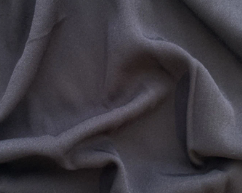 | Modal-Twill (100% modal) | 12/14 momme | 140 cm | Modal Twill’s luxurious weave offers a softness similar to cashmere. This eco-friendly textile, spun from wood fibers, is biodegradable. It’s a fabric that presents a natural brilliance and rich hue. Its silky surface and exceptional drape surpass traditional fibers like cotton and synthetics. It resists common issues such as shrinking and wrinkling as a refined fabric. With enduring strength, it’s less likely to show wear. |
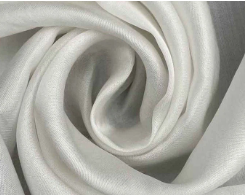 | Modal-Plain (100% modal) | 12/14 momme | 140 cm | Derived from the pulp of natural wood, modal plain fabric is known for its eco-friendly trait of biodegradability post-use. This fabric is deftly woven in a cross-weave pattern that endows it with a luxurious touch reminiscent of cashmere. Characterized by its softness, radiant sheen, and vibrant colors, the modal stands out with a smoother feel, enhanced luster, and superior draping qualities compared to conventional fabrics like cotton, polyester, and rayon. Its resemblance to mercerized textiles comes from a silk-like gloss and texture. |
Wool Fabrics
| Picture | Fabric | Thickness | Fabric Width | Introduction |
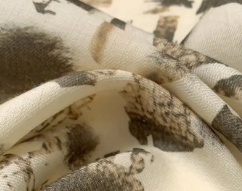 | Wool-Plain (100% wool) | 60/80/100 Yarns Count (the lower the thicker) | 140 cm | Wool, akin to silk, is a protein-based fiber that is soft, warm, and breathable, perfect for fall and winter scarves. Unlike the heavier wool pashmina, this variety boasts a fine weave with a touch of cashmere luxury at a more affordable price. Light and thin, it’s ideal for head or neckwear and pairs well with diverse patterns due to its plain, delicate texture. Our innovative double-sided printing technique enhances wool scarves, showcasing crisp designs on each side with striking detail. |
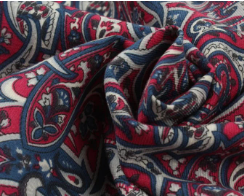 | Wool-Twill (100% wool) | 60/80/100 Yarns Count | 140 cm | Wool twill textiles are distinguished by a unique weaving pattern where warp and weft threads intertwine at minimum intervals of two, enhancing the material’s architecture. This twill variant enjoys popularity for its refined appearance and is notably lighter, making it ideal for scarves worn around the neck or head. In comparison to plain weaves, twill offers increased thickness, softness, and longevity. Its distinctive pattern imparts a pronounced texture to the fabric. |
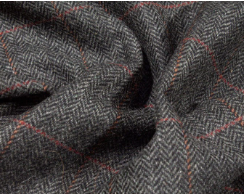 | Wool-Herringbone (100% wool) | 60/80/100 Yarns Count | 140 cm | The herringbone pattern is achieved through a specific twill technique, where the direction of the twill is alternated to create a distinctive V-shaped, zigzag weave. More substantial than its plain or twill counterparts, herringbone wool offers an enhanced feel of warmth and sophistication, ideal for crafting scarves designed for the chillier times of the year. The pronounced texture of herringbone is especially complementary to richer, deeper hues and intricate designs, adding to its visual and tactile appeal. |
Cotton Fabrics
| Picture | Fabric | Thickness | Fabric Width | Introduction |
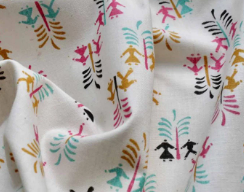 | Cotton Volie (100% cotton) | 60/80/100 Yarns Count (the lower the thicker) | 140 cm | With a superior yarn density, Cotton Voile is a premium fabric woven strictly from cotton threads. Its meticulous construction yields a silken texture that is both sheer and sturdy. Characterized by its lightness and breathability, the fabric has a polished finish with a touch of crispness, offering a graceful flow. Excelling in comfort, it’s the fabric of choice for crafting fine dresses, delicate sleepwear, and undergarments. |
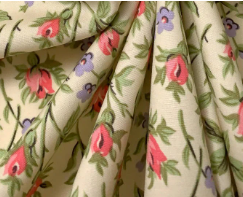 | Cotton Poplin (100% cotton) | 60/80/100 Yarns Count | 140 cm | Cotton Poplin, known for its longevity and lightness, is crafted from closely interlaced cotton threads, resulting in a lustrous and sleek surface that’s soft to the touch. Its robust nature means it resists creasing more effectively than other cotton varieties. The fabric’s texture is characterized by uniform diamond-like patterns, created by the warp yarns’ elevated sections. While predominantly a choice material for shirts, its versatility extends to accessories such as shawls and headgear. |
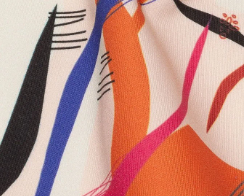 | Cotton Satin (100% cotton) | 60/80/100 Yarns Count | 140 cm | Cotton satin, with its glossy finish reminiscent of silk, boasts a complex weave where each yarn crosses over at least three others. This weave creates a fabric that is not only smooth to the touch but also exhibits a radiant sheen. Its natural breathability and moisture-wicking properties add to its comfort, ensuring a soft and luxurious feel superior to conventional cotton weaves. These traits make it an ideal material for crafting high-quality, intricately designed scarves. |
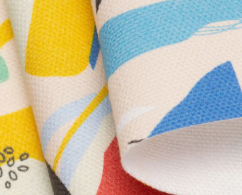 | Cotton Canvas (100% cotton) | 20/30/40 Yarns Count | 140 cm | Cotton Canvas, known for its robustness and water-resistant qualities, is a heavyweight fabric crafted in a simple weave pattern. It gained its initial acclaim as a sturdy material for bags and an ideal surface for art creations. Today, canvas extends its versatility to outdoor gear like tents, trendy footwear, and luxury purses. However, it’s not the best choice for scarves due to its bulk and rigidity, which also affects color absorption. Hence, our bandanas feature a finer grade of cotton canvas that’s gentle to the touch. |
Rayon Fabrics
| Picture | Fabric | Thickness | Fabric Width | Introduction |
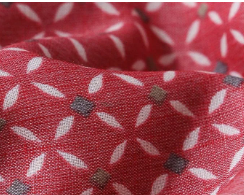 | Thick Rayon (100% rayon) | 20/30/40 Yarns Count | 150/200 cm | Viscose and Rayon are terms interchangeably used for the same cellulosic fiber, with ‘Viscose’ preferred in Europe and ‘Rayon’ in America. Derived from organic sources like wood or bamboo through synthesized processes, these fibers are known for their luxurious sheen and silky touch, comparable to natural silk. Their breathable nature and moisture management make them ideal for comfortable wear. |
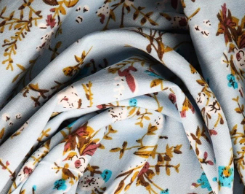 | Light Rayon (100% rayon) | 60 Yarns Count | 150/200 cm | Rayon and Viscose are both terms for fibers made from regenerated cellulose. In Europe, ‘Viscose’ is the preferred term following the ISO standard, whereas ‘Rayon’ is the term adopted in America as per the FTC guidelines. Rayon fabric is known for its silk-like luster and smoothness, offering a satin feel. It also provides excellent breathability, moisture management, and strong dye affinity, making it ideal for vibrant prints in clothing items such as dresses, scarves, and beachwear. |
Wholesale Woven Scarves — OEM Supply for Distributors and Fashion Brands
WeaveEssence supplies factory-direct wholesale woven scarves to fashion brands, retail distributors, private-label operators, and promotional merchandise buyers worldwide. Our vertically integrated production supports full OEM and ODM programs from 300 units, with Pantone-matched color accuracy, custom weave structures, and compliance documentation for global retail channels. Buyers comparing construction types can review our complete wholesale scarves overview for a category-by-category breakdown including knitted scarves and triangle scarves.
Woven vs. Knitted Construction — What Buyers Need to Know
Understanding the manufacturing distinction between woven and knitted scarves is essential for procurement teams specifying product briefs. Woven scarves are produced on a loom where warp and weft yarns interlace at right angles, creating a stable, non-stretch fabric structure. Knitted scarves, by contrast, use interlocking loops and exhibit inherent stretch and drape.
For fashion brands and retailers, woven construction offers a sharper edge definition in pattern work — particularly for geometric, plaid, and jacquard designs — and typically presents a more structured, premium hand-feel. The dimensional stability of woven fabric also simplifies quality control during bulk production runs, as shrinkage and dimensional variation are lower than with knit structures [citation: Textile World Manufacturing Standards Guide, 2025].
“Woven construction is the preferred choice for any buyer prioritising crisp pattern definition, dimensional stability, and a formal or elevated retail positioning.”
Buyers sourcing for fast-fashion or sportswear applications may favour knitted formats for their flexibility; however, woven scarves command stronger positioning in mid-market and premium retail segments, where structured silhouettes and print-like pattern accuracy are purchasing drivers. Our custom scarf manufacturing team can develop bespoke weave constructions for buyers requiring exclusive designs.
Jacquard Weave, Plaid, and Tartan Pattern Capabilities
WeaveEssence operates multi-shaft jacquard looms capable of reproducing complex repeat patterns with colour registers accurate to the Pantone TPX and TPG standards. Our pattern engineering team can digitise client-supplied artwork or develop original repeat structures based on a mood board or trend brief.
Pattern Formats Supported
- Jacquard woven: Up to 16 colours per repeat; suitable for brand logos, heraldic motifs, and detailed geometric repeats
- Plaid and tartan: Mathematically specified threadcount sequences reproduced in warp and weft; licensed tartan registration documentation supported
- Dobby weave: Smaller-scale geometric patterns including houndstooth, broken twill, and basket weave
- Plain and twill base: Solid-colour and two-tone weave structures for branded promotional programmes
“For licensees requiring authenticated tartan reproduction, WeaveEssence provides threadcount certificates and can reference the Scottish Register of Tartans on buyer request.” [citation: Scottish Register of Tartans, 2025]
All pattern files are retained in our digital library for repeat-order production consistency. Buyers receive a loom-state sample for approval before bulk cutting.
Material Options for Woven Scarves
Material selection affects hand-feel, drape, retail price positioning, and end-market compliance requirements. WeaveEssence offers the following standard yarn compositions for woven scarves, with blended constructions available on request.
| Material | Key Properties | Typical Application | Price Tier |
|---|---|---|---|
| 100% Polyester | Durable, colourfast, low-cost, easy-care | Promotional, fashion basics | Entry |
| Viscose (Rayon) | Silky drape, high lustre, breathable | Fashion retail, boutique | Mid |
| Acrylic Blend | Soft handle, colour-bright, warm feel | Autumn/winter retail programmes | Entry–Mid |
| Wool Blend (30–50% wool) | Natural warmth, premium hand, classic positioning | Department store, premium fashion | Mid–Premium |
OEKO-TEX Standard 100 certification applies across all material options in our standard catalogue. Buyers requiring specific fibre content labelling for EU or US market compliance can request pre-production fibre composition certificates [citation: OEKO-TEX Association, Standard 100 Edition 2025]. For buyers specifically interested in cotton-blend woven scarves, our cotton scarves page covers natural fibre options in more detail. Buyers sourcing luxury fibre options can also explore our cashmere scarves and polyester scarves material pages for full specifications.
Fringe Styles and Finishing Options
Fringe treatment is a significant aesthetic and construction decision in woven scarf specification. WeaveEssence supports the following standard finishing options:
- Hand-knotted fringe: Traditional finish created from extended warp ends; length configurable from 4 cm to 12 cm
- Twisted fringe: Grouped warp ends twisted for a more refined, fashion-forward look
- Hemmed finish: Warp ends turned and stitched; clean-edge presentation preferred for formal or corporate applications
- Fringe trim (applied): Separate woven fringe trim sewn onto hemmed ends; allows contrasting colour introduction
- No fringe (cut and seal): Serged or overlocked ends for functional or unisex applications
Applications — Fashion Brands and Promotional Programmes
Wholesale woven scarves serve a range of B2B buyer categories across fashion retail, corporate gifting, and promotional merchandise. WeaveEssence’s OEM programme is structured to accommodate both seasonal fashion brand programmes and high-volume promotional runs.
Fashion Brand and Retail Applications
Private-label fashion brands utilise woven scarves as a margin-accretive accessories category, particularly for Q3–Q4 seasonal programmes. Buyers in this segment typically require multiple colourways across a single weave pattern, with swing tag and care label branding per their retail specifications.
Corporate and Promotional Applications
Corporate buyers source woven scarves for executive gift programmes, employee onboarding kits, and event merchandise. Jacquard-woven company logos or brand patterns offer a quality level that printed or embroidered alternatives cannot match at comparable price points [citation: Promotional Products Association International, Industry Report 2025]. Buyers planning larger branded programmes can review our printing and embroidery options alongside woven techniques, and our fashion brands page covers retail-positioning guidance for private-label woven programmes. Buyers interested in full ODM development can explore our Custom Scarf OEM programme and Private Label Scarf manufacturing options.
“Jacquard-woven branding in the fabric itself — rather than applied via embroidery or printing — is perceived as a premium differentiator by corporate gift recipients, driving higher brand recall values.”
OEM Production Process Overview
WeaveEssence operates a structured OEM intake process designed for procurement teams working within defined development and delivery calendars.
- Brief submission: Buyer submits product brief including target dimensions, yarn specification, pattern reference, colourway, and quantity
- Technical review: Factory engineering team assesses feasibility and provides a costing proposal within 5 business days
- Sample development: Pre-production samples produced within 14–21 days; sample fee charged, credited against bulk order
- Sample approval: Buyer reviews and approves or requests modifications; up to two sample revisions included
- Bulk production: Commences on receipt of deposit (typically 30%); production timeline 30–45 days
- QC and dispatch: 100% inline quality inspection; pre-shipment inspection available on request; dispatch per agreed Incoterms
MOQ Tiers and Pricing Structure
WeaveEssence’s standard MOQ for woven scarves is 300 units per colourway. Volume tiers unlock unit-cost reductions and additional development support. Buyers evaluating the cost structure against other scarf formats can compare against our MOQ and pricing guide, and buyers interested in private label scarf development can discuss full ODM programmes with our product team.
| Order Volume | Unit Cost Adjustment | Additional Benefits |
|---|---|---|
| 300–599 units | Standard pricing | 1 free sample revision |
| 600–1,199 units | –5% vs. standard | 2 free colourways, priority scheduling |
| 1,200–2,999 units | –10% vs. standard | Free pre-shipment inspection, dedicated account manager |
| 3,000+ units | Negotiated | Full OEM partnership terms, stocking programme available |
Frequently Asked Questions
What is the minimum order quantity for wholesale woven scarves?
The standard MOQ is 300 units per colourway. This applies to both standard catalogue patterns and fully custom OEM developments. Orders combining multiple colourways of the same weave pattern may be structured to share a single production run, subject to technical review.
Can WeaveEssence reproduce a proprietary tartan or branded pattern?
Yes. Our jacquard programming team can reproduce any client-supplied pattern from digital artwork or physical sample reference. For proprietary tartans, buyers should provide the official threadcount sett sequence. We retain pattern files for repeat orders and issue loom-state samples for sign-off before bulk production.
Which certifications apply to woven scarves sourced from WeaveEssence?
All standard woven scarf production is covered by OEKO-TEX Standard 100 (testing for harmful substances), ISO 9001 (quality management system), and BSCI (social compliance audit). Certification documentation is provided with each bulk shipment. Additional third-party audits can be arranged on buyer request.
What Incoterms does WeaveEssence support for bulk scarf orders?
WeaveEssence supports EXW (Ex Works, factory gate), FOB (Free On Board, Chinese port), CIF (Cost, Insurance, Freight), and DDP (Delivered Duty Paid, buyer’s destination). DDP terms are available for most major import markets, including EU, UK, US, and Australia.
How long does the full OEM development process take for a new woven scarf programme?
From initial brief submission to bulk delivery, buyers should budget 8–12 weeks for a first-time custom development. This comprises approximately 1 week for technical review and costing, 2–3 weeks for sample development, up to 1 week for sample approval, and 5–6 weeks for bulk production and pre-shipment inspection. Repeat orders of approved styles reduce the timeline to 4–6 weeks.
Key Terms Defined
- Jacquard Weave
- A weaving method using a Jacquard loom attachment that individually controls each warp thread, enabling complex multi-colour pattern reproduction directly in the fabric structure — no printing or embroidery required.
- OEM (Original Equipment Manufacturer)
- In textile trade, OEM refers to factory production of goods to a buyer’s specification under the buyer’s brand. The manufacturer does not own the design or brand; WeaveEssence acts as the production partner.
- OEKO-TEX Standard 100
- An independent certification system testing textile products at every stage of production for harmful substances. Certification ensures the product is harmless to human health [citation: OEKO-TEX Association, 2025].
- Warp and Weft
- The two perpendicular sets of yarn in a woven fabric. Warp threads run lengthwise on the loom; weft threads are interlaced horizontally across them. The ratio and colour of warp and weft determine pattern and texture.
- Pantone TPX / TPG
- Pantone’s textile-specific colour matching systems. TPX references Fashion + Home Cotton standards; TPG references Fashion + Home Paper standards. Both are used to ensure colour accuracy from design brief through bulk production.
- BSCI (Business Social Compliance Initiative)
- An industry-driven programme supporting companies in improving working conditions in their global supply chains, assessed through third-party social audits against the BSCI Code of Conduct.
- Incoterms
- Internationally recognised trade terms (published by the International Chamber of Commerce) that define the responsibilities of buyers and sellers for delivery, insurance, and customs clearance in cross-border transactions [citation: ICC Incoterms 2020].